
The Healing Power of Herbs: A Guide to Women’s Hormonal Health
This piece is based on last week’s webinar hosted by the National Centre for Integrated Medicine (NCIM), featuring NCIM associate therapist and Medical Herbalist Claire Goulding.
Herbal medicine has been practised for thousands of years, yet it remains widely misunderstood. Dismissed by some as “alternative” or unscientific, while quietly underpinning much of the pharmaceutical industry we rely on today. The truth is that over 40% of all prescription drugs currently on the market are directly derived from plants. Herbal medicine isn’t a departure from modern healthcare, in many ways, its the origin of modern healthcare.
For women navigating hormonal health challenges whether that’s painful periods, PMS, PCOS, fibroids, perimenopause, or the exhaustion and mood disruption that so often accompanies them, herbal medicine offers a remarkably well-stocked toolkit. One that works gently with the body, can be used alongside conventional treatment, and draws on centuries of accumulated clinical wisdom. Here is an introduction to that toolkit.
What distinguishes herbal medicine from pharmaceuticals is not simply that it uses plants, it’s that it uses whole plants. Rather than isolating a single active compound and synthesising it at scale, herbalists work with the full plant: flowers, aerial tops, roots, and berries together, containing sometimes thousands of active constituents working in concert. This complexity is considered central to both the effectiveness and the gentleness of herbal treatment.
Western herbal medicine – the tradition rooted in European practice and the Northern Hemisphere’s native plant species – sits comfortably alongside conventional medicine rather than in opposition to it. Herbalists routinely work with patients who are taking prescription medications, including HRT, antidepressants and heart medications, carefully ensuring that herbal prescriptions are both safe and complementary to existing treatment. The body, it turns out, recognises plants. Side effects are generally minimal. And the range of conditions that respond well to herbal support is broader than most people realise.
Understanding the Hormonal Picture
Hormonal health rarely exists in isolation. The conditions that bring women to a herbalist such as painful periods, irregular cycles, heavy bleeding, PMS, PCOS, perimenopausal shifts, are almost always accompanied by other symptoms: disrupted sleep, digestive complaints, anxiety, fatigue, mood instability. From a herbal perspective, this isn’t coincidence. These systems are deeply interconnected, and treating hormonal imbalance effectively means addressing the whole picture. The menstrual cycle itself can be understood as a kind of internal seasonal calendar, moving through four distinct phases. Symptoms tend to concentrate most heavily in the luteal phase, the week or so before menstruation, when the body is more vulnerable to the effects of stress, inflammation, and hormonal fluctuation. Understanding when symptoms occur is as important as understanding what they are, and good herbal practice pays close attention to both.
The Foundations: Key Herbal Actions
Herbalists describe plants not just by their species but by their actions: the physiological effects they have on the body. A few categories are particularly relevant to women’s hormonal health.
Nervines calm and nourish the nervous system. This matters more than it might initially seem: when the body is locked in a chronic stress response, producing excess cortisol and adrenaline, virtually every other system suffers including hormonal balance, digestion, and sleep. Nervine herbs help shift the body out of fight-or-flight mode and into a state of rest and restoration. Oat Straw, Lemon Balm, and Skullcap are among the most valued in this category.
Antispasmodics reduce muscular tension and spasm. making them directly relevant to period pain, where uterine cramping is the primary complaint. Cramp Bark and Jamaican Dogwood are two of the most effective options available.
Carminatives support digestion and ease bloating. Gut complaints are extraordinarily common in the context of hormonal imbalance — and not incidentally so. When the nervous system is activated by stress, digestive function is suppressed. The bloating, indigestion, and wind that many women experience around their period are partly a consequence of this. Chamomile, Fennel, and Peppermint all work in this space.
Sedatives (gentler in their herbal form than the word implies) support deeper relaxation and more restorative sleep. Valerian, Passionflower, Hops, and Wild Lettuce all fall into this category. Ashwagandha, technically an adaptogen, also has meaningful benefits for sleep.
Blood sugar modulators help regulate glucose and insulin levels, increasingly understood to be a significant driver of hormonal disruption. Cinnamon, Gymnema, and Liquorice all play a role here, as does Nettle.
Hormonal modulators work more directly with the endocrine system to support balance and regulation. Dong Quai (Angelica sinensis), Shatavari, and Black Cohosh are key examples, drawing respectively on Chinese, Ayurvedic, and North American herbal traditions.
Some Key Herbs
Chamomile is one of the most versatile herbs available and one of the most underestimated. As both a nervine and an antispasmodic, it addresses the anxiety, tension, and cramping that so often arrive together. It also calms the digestive system, easing the bloating and indigestion that frequently accompany PMS. Gentle enough for children, it makes an excellent starting point for anyone new to medicinal herbs.
Liquorice Root. Far removed from the confectionery, Liquorice root is a potent adaptogen and adrenal tonic. It is particularly well-suited to people experiencing long-term exhaustion or burnout states the body enters after sustained periods of high stress. By nourishing the adrenal glands (the organs responsible for producing cortisol and adrenaline), it helps to restore a more balanced stress response over time. It also supports gut health, and is frequently combined with White Peony in protocols aimed at reducing fibroids and ovarian cysts.
Ginger is a warming, circulatory herb and a powerful anti-inflammatory. Clinical trials have shown it to be as effective as ibuprofen for period pain, a striking finding for something that can be added to food and drink as easily as a supplement. In herbal prescriptions, small amounts are often added to tincture blends as a kind of botanical vehicle, helping to direct the other herbs in the mix to where they’re most needed.
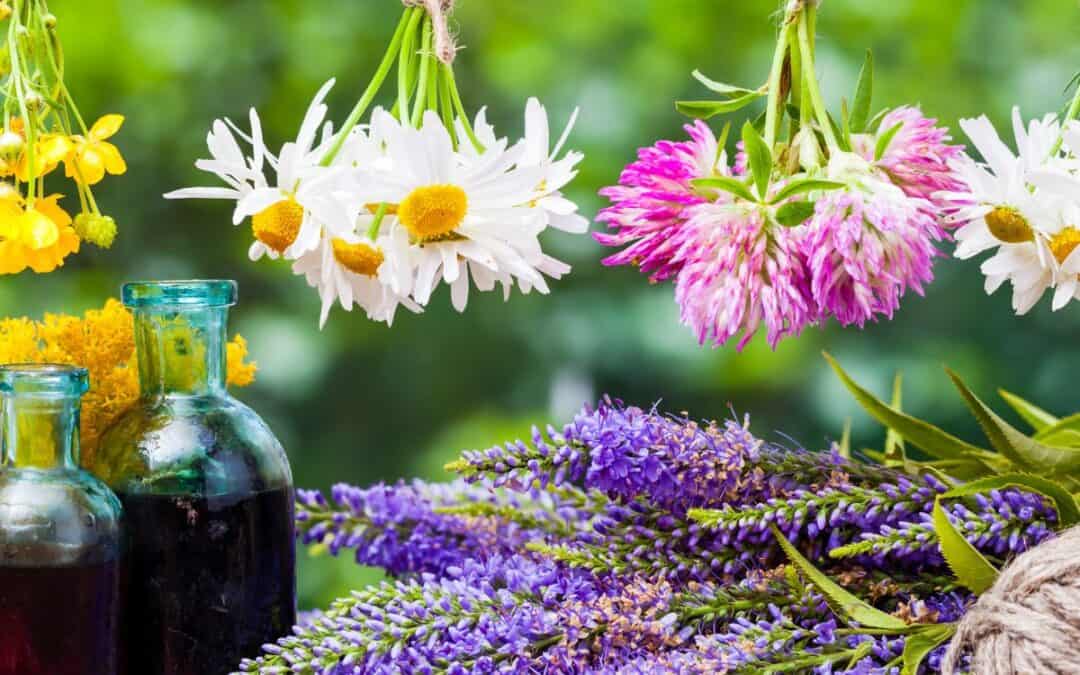
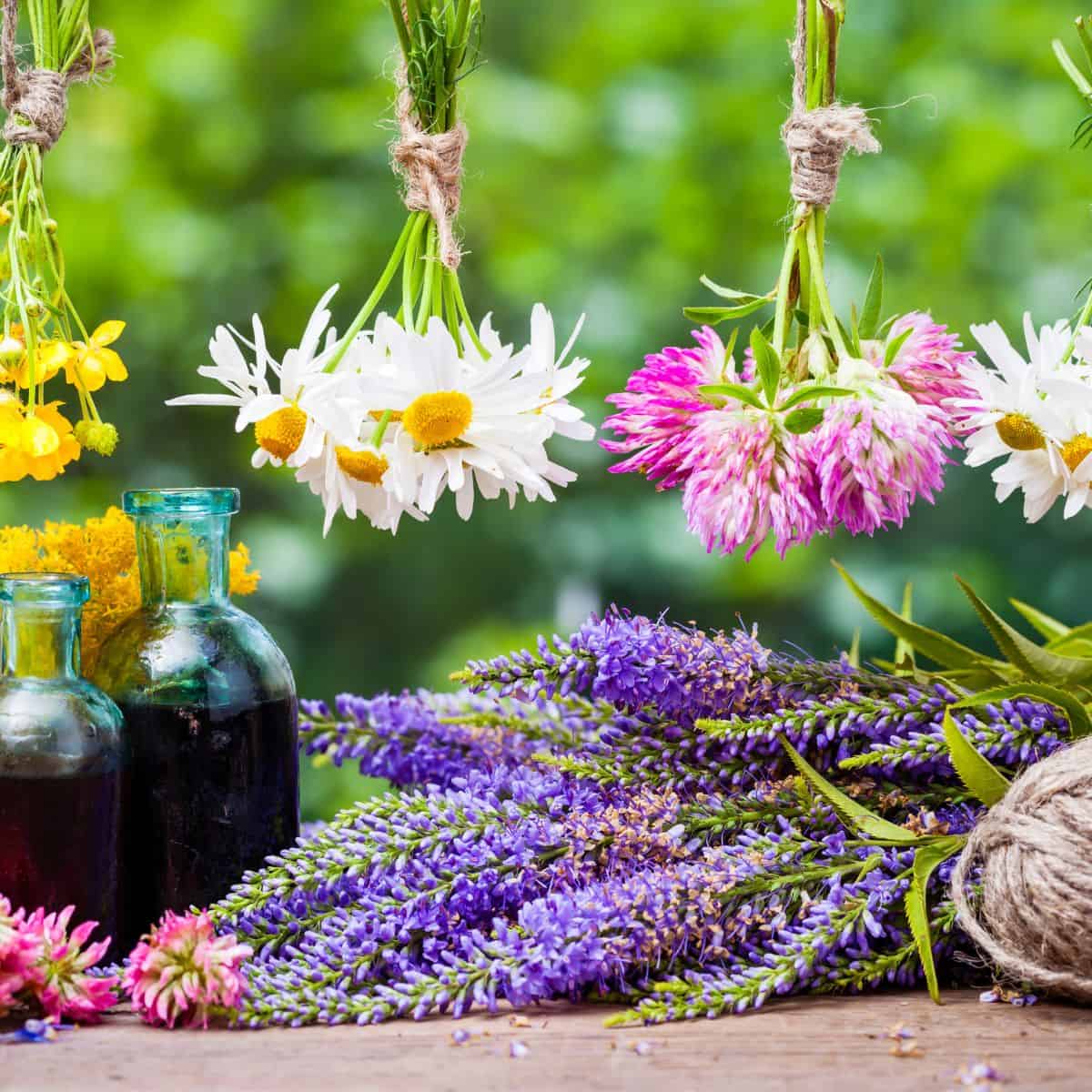
Red Clover is currently in bloom across British meadows — the flowering tops and leaves easily spotted, and readily harvestable by those who know what to look for. It is rich in phytoestrogenic compounds, which mimic the action of oestrogen in the body, making it one of the most commonly used herbal options for women navigating perimenopause who prefer not to take HRT. It also has cooling, anti-inflammatory properties useful for chronic skin conditions like acne. Linseed (flaxseed) is another phytoestrogenic food worth incorporating into the diet during times of hormonal transition.
Nettle. Often growing uninvited in gardens and hedgerows across the British Isles is a genuine nutritional and medicinal powerhouse. Rich in vitamins A, B, C, and K, it is invaluable for replenishing the body after heavy periods, addressing anaemia and low iron, and supporting women experiencing fatigue and hair loss. Its blood sugar-regulating properties make it useful in the metabolic side of hormonal health too. Few herbs offer this combination of accessibility and potency.
Cramp Bark is arguably the single most targeted herb for period pain. It has a particular affinity for the uterus, reducing spasm and tension in uterine muscle with notable effectiveness. It also grows in British hedgerows — known in gardens as Guelder Rose, with its distinctive white flowers. For best results, it should be started at the first signs of cramping rather than waiting for pain to escalate, and taken consistently over two to three months to build lasting benefit.
Vitex is a cornerstone herb for hormonal regulation, acting on the pituitary gland to moderate prolactin and support healthy progesterone levels. It can help to regulate cycles disrupted by PCOS, reduce PMS symptoms, and address the hormonal irregularities associated with fibroids. Its effects are gradual but meaningful and, importantly, entirely natural.
Yarrow is a herb of contradictions in the best sense: it can both move the blood and reduce bleeding, depending on what the body needs. Where heavy periods are a problem, it acts as a styptic and astringent. Where premenstrual stagnancy causes that heavy, sluggish, congested feeling so characteristic of PMS, its circulatory-stimulating properties help to get things moving again. It can even be applied directly to small cuts and wounds as a first-aid measure to encourage clotting.
Hawthorn which is flowering right now as Mayflower in the hedgerows, is a profound heart herb in every sense. From a physiological perspective, it regulates blood pressure, eases palpitations, and is a recognised cardiovascular tonic. From a more holistic perspective, it has a long history of use in supporting the heart through grief, emotional difficulty, and transition. It pairs well with California Poppy for sleep support, particularly for those whose sleeplessness is driven by anxiety or stress.
California Poppy. Despite the associations its name might conjure, California Poppy is non-addictive, safe for children, and entirely distinct from Opium Poppy. It works gently on the nervous system to reduce pain, ease anxiety, and support sleep, making it a particularly useful herb for women whose menstrual symptoms are amplified by stress and nervous tension.
The Liver: The Hormonal Hub
No discussion of women’s hormonal health in herbal medicine is complete without the liver. This tireless organ processes every hormone that circulates through the body, filters the blood around the clock, and plays a central role in metabolic function. When liver function is compromised through poor diet, stress, alcohol, or simply being overburdened, hormonal imbalances tend to worsen.
Supporting liver function is therefore a significant component of herbal prescribing for hormonal health. Dandelion, Burdock, Milk Thistle, Yellow Dock, Turmeric, and Schisandra Berry are all used regularly as liver tonics, helping to cool inflammation, improve detoxification, and restore metabolic balance.
How to Take Herbs
Teas and infusions are the most accessible starting point. For flowers, leaves, and aerial parts of the plant, steeping for at least 15 minutes, with a lid on the cup to prevent medicinal volatile compounds from evaporating, produces a therapeutic brew. A clinical-strength infusion uses one to three teaspoons of dried herb per cup and is taken two to three times daily. A professional herbal tea blend will often contain six or seven herbs working together.
Decoctions are used for harder plant material. Roots and barks such as ginger, turmeric and Cramp Bark need to be simmered on the stove for longer periods to extract their full medicinal benefit.
Tinctures are whole plant extracts preserved in alcohol, allowing the full range of active constituents to be captured and stored. They offer precise, consistent dosing typically 10–15ml per day for adults, split into two doses and are the format most commonly used in professional herbal prescriptions. A bespoke tincture blend from a herbalist might contain up to eight herbs, individually selected for the patient’s constitution and symptoms. For those who prefer to avoid alcohol, glycerite tinctures offer a comparable alternative and are also suitable for children.
The Case for Seeing a Herbalist
With a wealth of herbal information available online, self-prescribing can seem straightforward. But herbal medicine, like any form of treatment, is most effective and safest when tailored to the individual. Some herbs interact with medications. Some are contraindicated in certain conditions. And the art of combining herbs into a prescription that addresses the whole picture, rather than a single symptom, is a practised skill.
A qualified herbalist brings not just knowledge of the plants themselves but the clinical experience to assess constitution, identify root causes, and create protocols that are both safe and genuinely effective. For women dealing with complex, layered hormonal health challenges, that level of bespoke support can make a significant difference.
For those not yet ready for a formal consultation, there are simple, low-risk ways to begin engaging with medicinal herbs. Nervines like Chamomile, Lemon Balm, and Oat Straw are excellent starting points as they are gentle, widely available, and beneficial for almost everyone. Adding Nettle tea to the daily routine is another easy win, particularly during menstruation. Growing or foraging herbs like Yarrow, Hawthorn, and Red Clover connects people more directly with the plants and their seasonal availability.
Cycle tracking is also worth exploring not just as a fertility tool, but as a means of understanding personal patterns, identifying when symptoms are most likely to arise, and building a more informed relationship with one’s own body. For those who are post-menopausal, this can even be done in alignment with the lunar calendar.
Herbal medicine is not a quick fix. It works best with consistency ideally beginning treatment at the first sign of symptoms and committing to at least two to three months of regular use. But for those willing to make that commitment, the plants growing in the hedgerows, gardens, and meadows outside the door may offer more than most people ever imagined.
To find out more about herbal consultations with Claire Goulding, visit her clinic pages at NCIM: NCIM Associate Therapists
Remember NCIM hosts regular free webinars on Integrative Medicine. Our upcoming sessions include Breath as Medicine and a dedicated exploration of Arnica. Visit our events page to sign up: NCIM Events