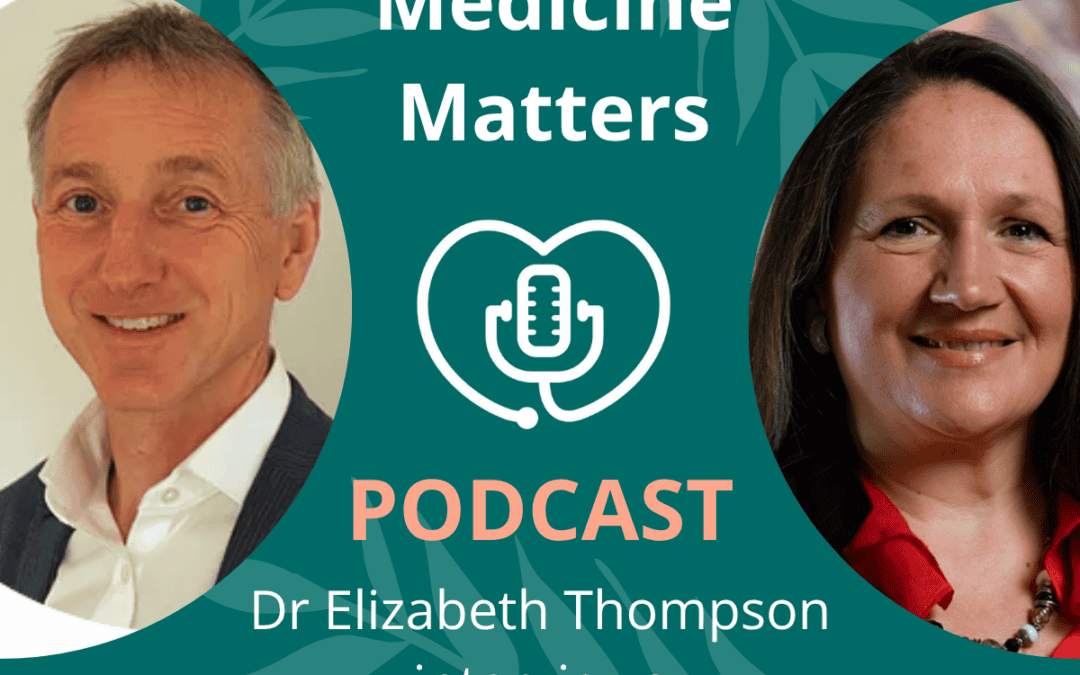
#26 Killing Carbs: The Answer to Type 1 Diabetes? with Dr Ian Lake
In this fascinating episode of Integrative Medicine Matters, Dr Elizabeth Thompson sits down with Dr Ian Lake, a biochemist turned GP who also happens to have lived with Type 1 diabetes for over 30 years. Ian shares the remarkable story of how a terrifying hypoglycaemic episode alone in a field in Norway, combined with an early diagnosis of diabetic retinopathy, led him to radically rethink how he managed his condition. Drawing on his background in biochemistry, his training in traditional Chinese medicine and his discovery of the pioneering work of Dr Richard Bernstein, Ian made the decision to dramatically reduce his carbohydrate intake and focus on managing insulin rather than glucose. The results were profound. What follows is one of the most illuminating conversations you will hear about how the body truly works, why insulin is far more important than we are typically told, what ketones actually are and why they are nothing to fear, and how a 1000 mile cycling trip through the Alps became the ultimate real world experiment in metabolic health, ending in a book that could genuinely change how Type 1 diabetes is understood and managed.

Key Topics Discussed:
🚴 Necessity can be the greatest teacher. It was a near fatal hypo in rural Norway and an early diagnosis of diabetic retinopathy that finally pushed Ian to radically change his approach to managing Type 1 diabetes. Sometimes the most important breakthroughs come from our most difficult moments.
🔬 Insulin matters more than glucose. The conventional focus in diabetes management is on glucose control, measured through HbA1c. But Ian argues convincingly that insulin is the more important variable. Good insulin control leads to good glucose control, but the reverse is not guaranteed and high insulin, even with normal glucose readings, drives inflammation, weight gain, high blood pressure and fatty liver disease.
🥑 You do not need to eat carbohydrates to have enough glucose in your body. The liver produces up to 60 grams of glucose a day through a process called gluconeogenesis, meeting the needs of the tissues that depend on it. This means reducing dietary carbohydrates does not starve the body of glucose, it simply reduces the amount of insulin needed to manage it.
🍄 Ketones are not the enemy. There is widespread fear among clinicians and patients about ketones in Type 1 diabetes, often confused with diabetic ketoacidosis. But nutritional ketosis, where ketones sit between 0.3 and 1.5, is a completely different and entirely safe physiological state. Diabetic ketoacidosis involves ketone levels of 10 to 15 and is always accompanied by very high blood sugar and serious illness.
🧠 Ketones are a natural and powerful brain fuel. Emerging research is showing that ketone bodies support brain function and may be beneficial in a range of mental health conditions including bipolar disorder, as well as brain fog associated with perimenopause and menopause. The brain thrives on metabolic flexibility, the ability to use both glucose and ketones as fuel.
⏰ Timing matters as much as what you eat. Insulin has its own circadian rhythm. We are most insulin sensitive in the mid morning to late afternoon and most insulin resistant first thing in the morning and late at night. This means eating a large breakfast very early or eating late at night works against the body’s natural hormonal patterns, and intermittent fasting is entirely compatible with, and arguably ideal for, Type 1 diabetes management.
🏔️ Metabolic flexibility is the goal. Ian’s 1000 mile cycling trip through the Alps, during which he wore continuous glucose and ketone monitors throughout, demonstrated that with low carbohydrate eating and optimised insulin management, a person with Type 1 diabetes can exercise intensively, climb mountain passes and arrive with a blood glucose of 4.8 without having checked it once during five hours of cycling. That level of freedom is possible.
📖 The book Shifting Gears is written for everyone. Combining a travel journal of his epic cycling adventure with an accessible textbook aimed at a general readership, Ian wrote the book because consistent, up to date information about low carbohydrate approaches to Type 1 diabetes is still difficult to find. His central message is to use insulin as wisely and sparingly as possible, understanding how it interacts not just with food but with exercise, stress, sleep, mental health and the natural rhythms of the body.
About our guest:
Dr Ian Lake is a UK-based GP with 37 years of clinical experience, practising in Stroud. He holds a degree in Medical Cell Biology and Biochemistry from the University of Liverpool and qualified as a Doctor of Medicine from the University of Southampton in 1985.
At the age of 36, Ian was diagnosed with LADA (Late Autoimmune Diabetes in Adults) a form of Type 1 diabetes. After two decades managing his condition through a conventional approach, he transitioned to a very low carbohydrate diet, with results so significant that they transformed both his personal health and his professional focus.
Since then, Ian has become a passionate advocate for low-carbohydrate approaches in the management of Type 1 diabetes, speaking at conferences nationally and dedicating much of his work to making this information accessible to others living with the condition. He is a founder member of the Public Health Collaboration (PHC UK), a charity committed to promoting real food for health.
His new book “Shifting Gears” tells the story of his 1000 mile cycle ride through the Alps and his journey to understanding insulin metabolism in a whole new way. Available from www.type1keto.com.
If you’re interested in learning more about Integrative Medicine, you can:
👉 Sign up for our free newsletter Integrative Medicine Matters
👉 Sign up for our NCIM Membership, just £4.99 per month
👉 Sign up for our free Introduction to Integrative Medicine course
👉 Explore our 10 CPD Point Discovery Course in Integrative Medicine
👉 Find out more about our master’s Level 7 Diploma, including single modules you can enrol in today!
NCIM also offers an Integrative Medicine Clinic, where our expert team of Integrative Medicine Doctors and Integrative Clinical Team work collaboratively to support your health and wellbeing. Learn more and book an appointment.
We would love to get your feedback on the topics and conversations we feature. Follow and connect with us on social media – Instagram, Facebook, and LinkedIn – and let us know your thoughts.
Don’t forget to subscribe and share if you enjoyed this episode!
Disclaimer: This podcast is for educational purposes only and is not intended as medical advice. Always seek the guidance of a qualified healthcare professional before making any changes to your health or treatment plan.