

Prevention Medicine in the NHS
The NHS was built in 1948 to treat illness, not to prevent it. Nearly 80 years on and that logic ultimately still shapes where the money goes.
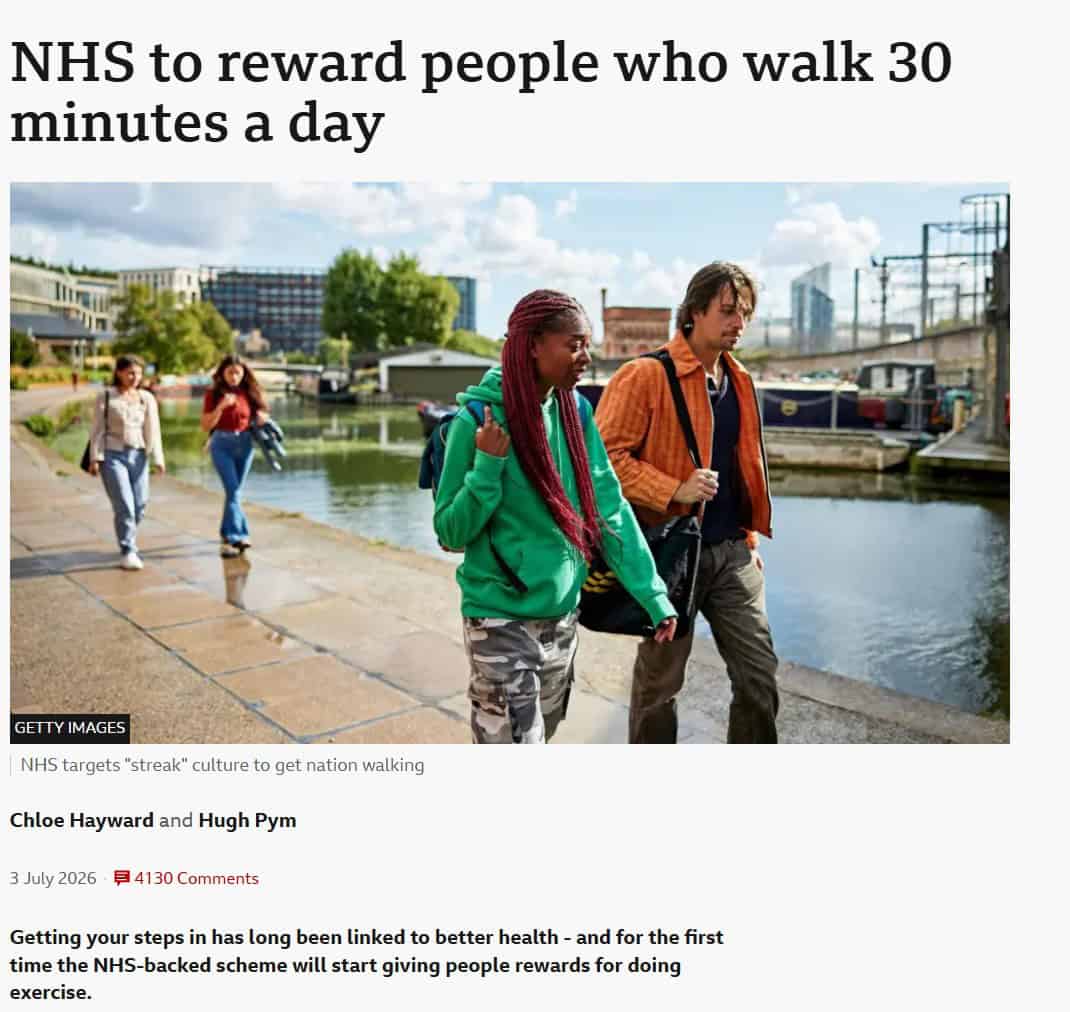
An estimated 90% or more of the NHS budget goes on treating disease after it appears. But as we know most chronic illness’ – heart disease, type 2 diabetes, many cancers – are heavily influenced by lifestyle, environment and early intervention. Prevention gets a fraction of NHS budget but it is interesting that we’re starting to see incentives such as rewarding people who walk 30 minutes a day.
I would argue this isn’t an oversight by our national health service. The NHS is funded and measured in short political cycles, but as we know prevention pays off over decades, long after the current leadership will have been replaced. A hip replacement or a course of chemotherapy shows up in this year’s statistics but a nutrition programme that prevents diabetes in ten years’ time doesn’t win anyone a headline. A&E backlogs and waiting lists dominate public and political attention so acute care is where the NHS talks the talk.
Add in a medical system trained overwhelmingly in pharmacological and surgical intervention, with little undergraduate education in nutrition, stress physiology or root-cause thinking, and lifestyle medicine stays on the periphery instead of central to care.
Redirecting NHS funding toward prevention is hard when even acute care (which the NHS is famous for) is visibly failing right now, even though every pound spent upstream could reduce pressure downstream.
I’m mindful that not every health economist or doctor agrees. Some might argue that the evidence base for lifestyle interventions at scale is still developing and that acute care investment saves more lives per pound in the short term.
I would argue the fix isn’t more money alone. It’s a shift in mindset, training and incentives. Practitioners need the skills to address root causes, gut health, inflammation, metabolic function, chronic stress – alongside conventional care. Reimbursement models need to reward keeping people well, not just treating them once they’re sick.