#20 Timing Is Everything: How Your Circadian Rhythm is Reshaping Your Health with Adriano dos Santos
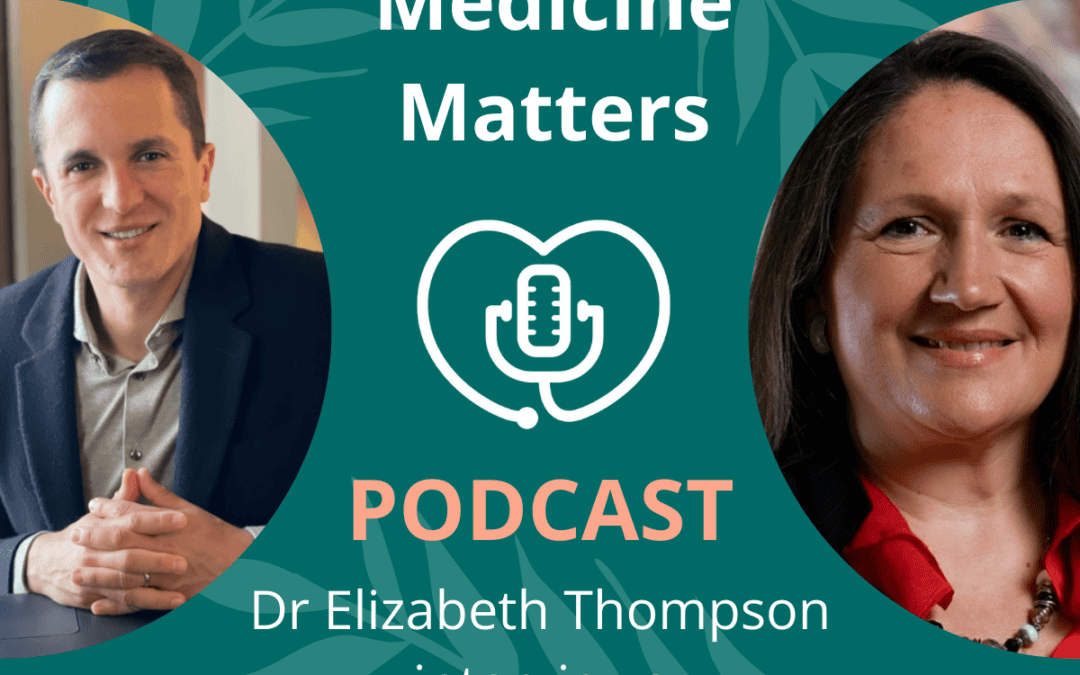
In this fascinating episode of Integrative Medicine Matters, Dr Elizabeth Thompson is joined by Adriano dos Santos, sleep medicine researcher, integrative practitioner and circadian biology specialist, for a deep dive into the science of our internal body clocks. Adriano challenges the conventional medical model, arguing that many patients are not diagnostic failures but timing failures, whose symptoms are rooted in circadian misalignment rather than disease.
Drawing on his research fellowship at Professor Russell Foster’s lab in Oxford and his sleep medicine masters at the University Hospital of Bern, Adriano unpacks the remarkable complexity of our circadian system, from clock genes in every cell of the body, to the gut-brain axis, melatonin production and chrononutrition.
Practical, science-backed and genuinely eye-opening, this conversation will change the way you think about when you sleep, when you eat and how you heal.

Key Topics Discussed:
- You are not broken, you may just be misaligned. Many patients who feel chronically unwell despite normal test results may be suffering from circadian misalignment rather than a diagnosable condition, meaning simple timing adjustments could make a profound difference to how they feel.
- Every single cell in your body has its own clock. Circadian rhythms operate at a cellular level, including in red and white blood cells, meaning the timing of everything from immune function to nutrient absorption is governed by an intricate, body-wide synchronised clock system.
- When you eat matters as much as what you eat. The emerging field of chrononutrition reveals that our bodies process nutrients very differently depending on the time of day, for example, we are far more efficient at processing glucose, fats and proteins in the morning than in the evening.
- Melatonin starts rising earlier than most people realise. For someone who naturally falls asleep around 10pm, melatonin production typically begins as early as 6 to 6.30pm, meaning that heavy meals, bright ceiling lights and intense exercise in the evening can actively suppress this natural process and disrupt sleep.
- The direction of light matters, not just the brightness. Light entering from above, such as ceiling LED lighting, is processed by the brain as sunlight and suppresses melatonin production. Simply switching to dimmed table lamps in the evening can meaningfully support your natural sleep cycle.
- Your gut and your brain are in constant conversation about sleep. Adriano’s research revealed that GABA, a calming neurotransmitter, is produced in the gut by specific bacteria feeding on fermentable fibre, and communicates with the brain via the vagus nerve, directly influencing the neurons responsible for sleep.
- Simple habits carry powerful science behind them. Dimming lights, eating lightly in the evening, cuddling a pet or partner, journaling, expressing gratitude and practising breathwork all have evidence-backed mechanisms that support melatonin production, oxytocin release and nervous system regulation.
- Circadian medicine needs to sit at the heart of system biology. Adriano is currently developing the CK New Matrix, a scientifically validated framework that will allow practitioners to assess and address circadian health as a core component of whole-person care, rather than an afterthought.
Research discussed:
1) Dos Santos, A. (2025) — Circadian rhythms and the gut microbiome: Investigating the impact of dim light in the evening. Master’s thesis, University of Oxford.
Experimental work showing that dim evening light (~20 lux) can shift feeding timing and desynchronise peripheral clocks (gut/liver) from the central clock; also observed microbiome shifts including a decline in Akkermansia muciniphila.
2) Dos Santos, A.; Vasylyshyn, A. (2025) — The modulatory role of short-chain fatty acids on peripheral circadian gene expression: a systematic review. Frontiers in Physiology (published 14 July 2025).
Synthesised human/interventional evidence linking SCFAs to shifts in peripheral clock gene expression, translating into a clinically-useful idea: timing of SCFA production/intake matters for circadian re-alignment (shift work, jet lag, social jet lag). https://doi.org/10.3389/fphys.2025.1595057
3) Dos Santos, A.; Galiè, S. (2024) — The Microbiota–Gut–Brain Axis in Metabolic Syndrome and Sleep Disorders: A Systematic Review. Nutrients, 16, 390.
Systematically mapped how metabolic syndrome + sleep disorders converge on shared gut microbiota patterns, positioning nutrition as a key lever across both domains. https://doi.org/10.3390/nu16030390
4) Life Time Book by Prof Russell Foster : https://www.penguin.co.uk/books/321815/life-time-by-foster-russell/9780241529317
About our guest:
Adriano dos Santos is a clinical registered nutritionist and researcher specialising in circadian biology and the gut–brain–microbiome axis. He is a speaker known for translating complex scientific concepts into practical insights that advance integrative health. He holds a Nutrition Science Degree (BSc Hons) and certifications including AFMCP (Applying Functional Medicine in Clinical Practice). His expertise in sleep medicine, gut health, and metabolic syndromes, combined with his passion for improving patient outcomes, is truly inspiring.
If you’re interested in learning more about Integrative Medicine, you can:
👉 Sign up for our free newsletter Integrative Medicine Matters
👉 Sign up for our NCIM Membership, just £4.99 per month
👉 Sign up for our free Introduction to Integrative Medicine course
👉 Explore our 10 CPD Point Discovery Course in Integrative Medicine
👉 Find out more about our master’s Level 7 Diploma, including single modules you can enrol in today!
NCIM also offers an Integrative Medicine Clinic, where our expert team of Integrative Medicine Doctors and Integrative Clinical Team work collaboratively to support your health and wellbeing. Learn more and book an appointment.
We would love to get your feedback on the topics and conversations we feature. Follow and connect with us on social media – Instagram, Facebook, and LinkedIn – and let us know your thoughts.
Don’t forget to subscribe and share if you enjoyed this episode!
Disclaimer: This podcast is for educational purposes only and is not intended as medical advice. Always seek the guidance of a qualified healthcare professional before making any changes to your health or treatment plan.